Moroccan food is one of the reasons to make the trip. It blends gentle spices, dried fruit, preserved lemon and slow cooking, and it changes from region to region. Here are the dishes to try, from breakfast to dinner, and a few habits to enjoy them without trouble.
The great classics
- Tagine. The word means both the clay pot with its conical lid and whatever cooks slowly inside it. The most common: chicken with preserved lemon and olives, kefta (meatballs) with eggs, lamb with prunes and almonds, vegetables.
- Couscous. Hand-rolled semolina, steamed, with vegetables and meat. In many families it is the Friday dish. The know-how around couscous has been on UNESCO's intangible heritage list since 2020, in a joint file from Morocco, Algeria, Mauritania and Tunisia.
- Pastilla. Paper-thin pastry, a filling of poultry with almonds and cinnamon, icing sugar on top: Moroccan sweet-and-savoury, a speciality linked with Fes. There is a seafood version too.
- Harira. A tomato, lentil and chickpea soup, served all year and above all during Ramadan to break the fast.
- Tanjia. Marrakech's own dish: meat cooked for hours in a clay jar, traditionally in the embers of a hammam's furnace.
Breakfast and snacks
- Msemen: a flaky square pancake, served with honey or cheese.
- Baghrir: the "thousand-hole pancake", light, with honey and butter.
- Harcha: a dense, slightly sweet semolina flatbread.
- Amlou: a spread of almonds, argan oil and honey from the Souss region.
- Mint tea, poured from a height, very sweet, at any hour: turning it down is rarely a good idea.
Street food and markets
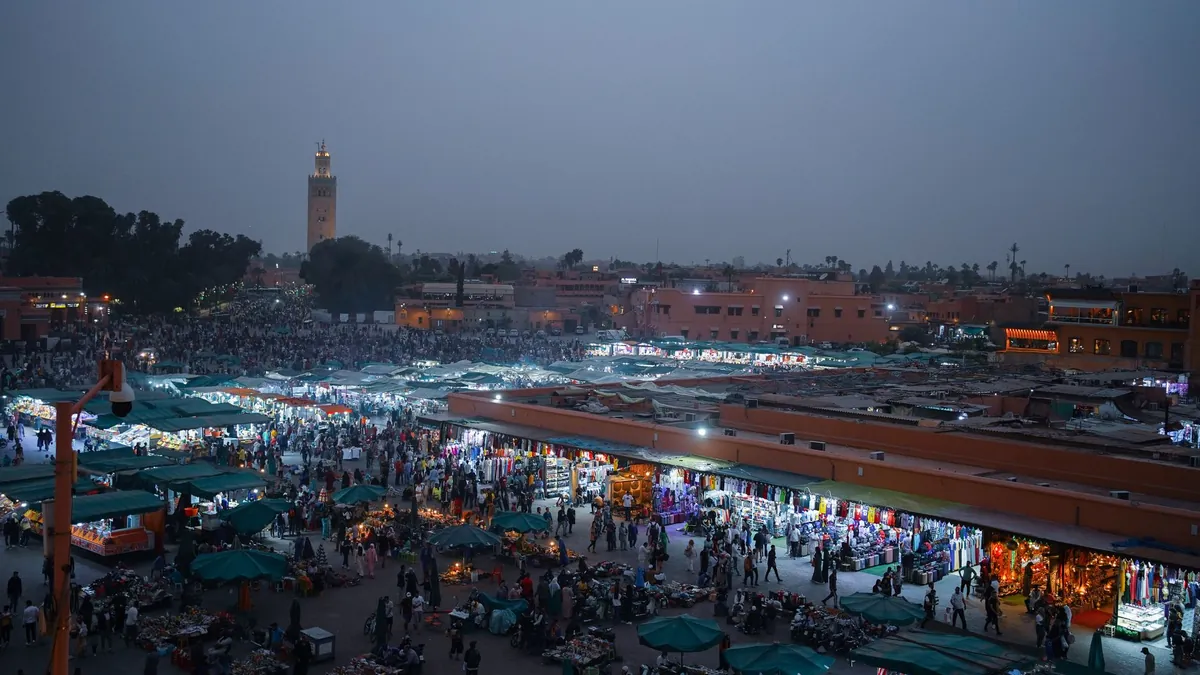
At nightfall, Jemaa el-Fna square in Marrakech fills with grill stalls, snails in spiced broth and fresh orange juice. Elsewhere, look for kefta sandwiches, maakouda (potato fritters) and, on the coast, grilled sardines in Essaouira or Safi. Cooked salads are a treat: zaalouk (aubergine and tomato), taktouka (peppers and tomato).
Eating without getting ill
A few simple habits cut the risk of an upset stomach a lot:
- Go for dishes cooked and served piping hot, and for busy stalls: high turnover means fresh food.
- Drink bottled water if your stomach is sensitive, and be wary of ice.
- Peel fruit; go easy on raw salads in the first days.
- Wash your hands before eating, especially if you eat with bread, the Moroccan way.
Finding the good places
The best food is often the least visible: a small eatery at the end of an alley, a neighbourhood place with no sign. Recent reviews on online maps, instant translation of an Arabic menu and directions to the door only need a connection. With an eSIM you have them from the airport; our plans run from 1 day (€6) to 30 days (€79).
See the Morocco eSIM plans and check your phone's compatibility. To translate a menu, see also translating Moroccan Arabic with your phone.